

Country guides
 Africa
South Africa Travel Guide
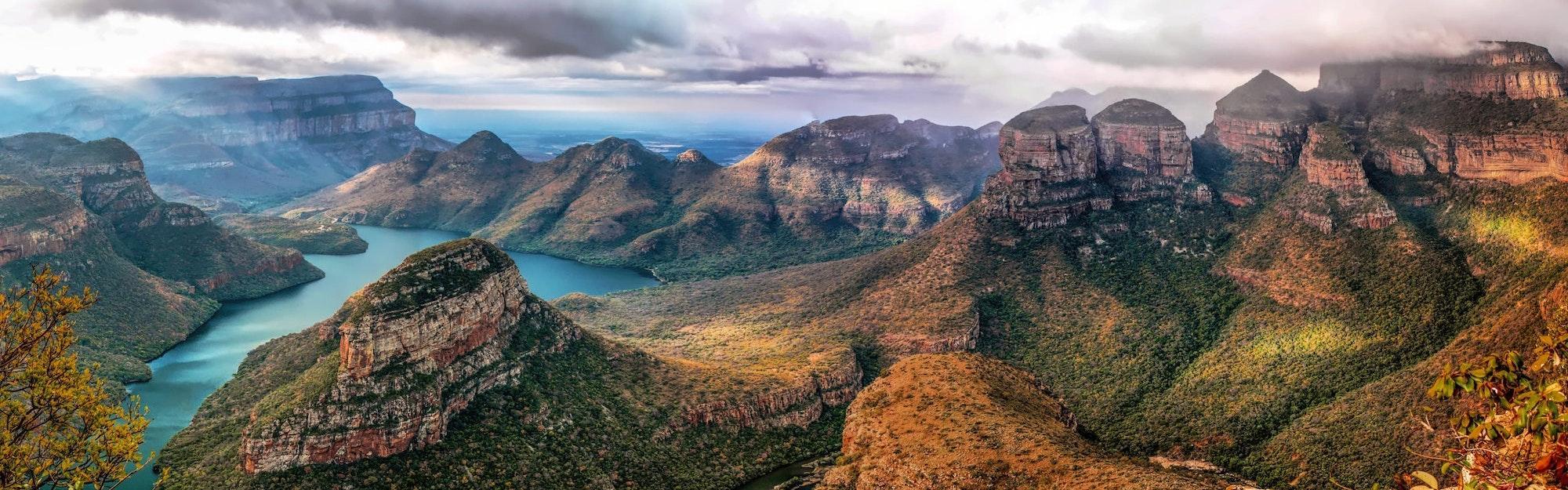
South Africa's stunning natural beauty continues to enchant adventure seekers, who never tire of its powdery beaches, jagged mountains and wildlife-rich national parks. A wonderfully diverse culture is also on offer, as the country has 11 official languages and a colourful population that draws its heritage from Africa, Asia and Europe.
Nature lovers will encounter the Big Five of African wildlife (lion, elephant, leopard, buffalo and rhino), along with thousands of other species of animals and plants on safaris in nature reserves such as Kruger National Park and Hluhluwe National Park. The country's landscape encompasses a range of climates and terrains, including deserts, mountains, plateaus, grasslands, bush, wetlands, and subtropical forests.
Culturally, visitors can expect a warm welcome, whether they're browsing the Indian markets in Durban, enjoying a shisa nyama (barbecue) in Soweto, or tasting celebrated local varieties at a winery in Stellenbosch. There's a powerful sense of history as well, which is palpable at important attractions such as the battlefields of KwaZulu-Natal, the Apartheid Museum in Johannesburg, and Robben Island off the coast of Cape Town.
Best time to visit South Africa
The climate of South Africa varies markedly between regions, making it important for travellers to research the specific regions they are visiting. Generally, the best time to visit South Africa is late spring (October and November) and early autumn (March and April) to avoid the intense heat of summer and the cold and wet winters in the Cape. However, many tourists relish the hot summer months between December and February.
What to see in South Africa
-Get up close with the Big Five and other wildlife in the Kruger National Park.
-See Nelson Mandela's former cell at Robben Island Prison.
-Ride the rollercoasters and visit the casino in Gold Reef City.
-Take a township tour through Soweto.
-Have a drink in the sunshine on Durban's Golden Mile.
What to do in South Africa
-Go scuba diving in Sodwana Bay.
-Ride a cable car to the top of Table Mountain for spectacular views of Cape Town.
-Go wine tasting in the vineyards of Stellenbosch and the Cape Winelands.
-Learn to surf in Coffee Bay.
-Go shark cage diving in Gansbaai.
Getting to South Africa
Direct flights to South Africa from the US are long, but are generally available from Atlanta, New York, and Washington DC. Flights to South Africa from the UK and Europe are more plentiful. Unfortunately, because of the relatively long distance from both Europe and North America, flights to South Africa are rarely cheap. Most flights to South Africa land at OR Tambo International Airport in Johannesburg, but there are some direct flights to Cape Town.
Read
Country of My Skull by Antjie Krog, The Long Walk to Freedom by Nelson Mandela, Ways of Dying by Zakes Mda, Zoo City by Lauren Beukes.
Listen
Freshlyground, Ladysmith Black Mambazo, Hugh Masekela, and Miriam Makeba.
Watch
Invictus (2009), Amandla: Revolution in Four-Part Harmony (2002), Safe House (2012), and District 9 (2009).
Drink
South African wine from the Cape Winelands, locally produced beer such as Jack Black and Mitchell's.
Eat
Cape Malay curries, boerewors, or a typical Durban 'bunny chow'.
What to buy
Ndebele beaded jewellery, wooden and soapstone carvings.
What to pack
Pack malaria tablets before heading to Kruger, and lots of insect repellent.
What's on in South Africa
The Hermanus Whale Festival celebrates the arrival of dozens of humpback whales each spring, and the National Arts Festival in Grahamstown hosts the best music, art, theatre and comedy from around South Africa in July. Runners should look out for the world-famous Comrades Marathon, which is run between Durban and Pietermaritzburg every year in May.
Did you know?
-Nelson Mandela and Archbishop Desmond Tutu both had houses on Vilakazi Street in Soweto, making it the only road in the world to house two Nobel Prize winners.
-Seventy percent of the Cape's plant species are not found anywhere else on the planet.
-South Africa has the third highest level of biodiversity in the world.
A final word
The culturally and environmentally diverse landscape of South Africa is the ultimate holiday destination for adventurous travellers.